Decision Data Plane · v1.0: Community Edition
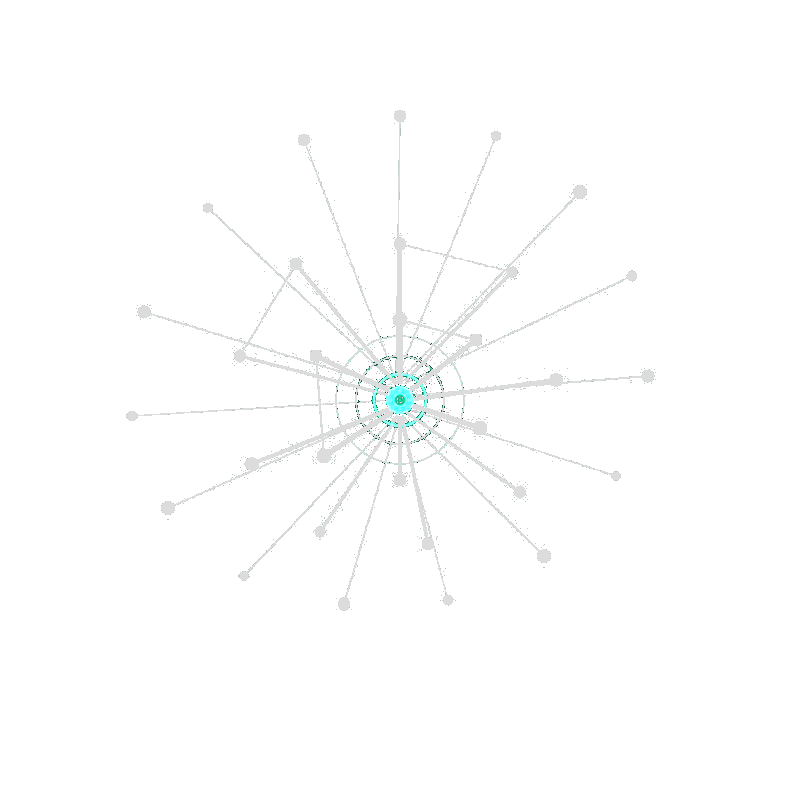
ARA Decision Field mark
ARA.
Accurate  ·  Replay  ·  Audit

ML systems decide. Then forget.
ARA is the infrastructure layer that makes them remember -
accurately, replayably, for every entity, at inference time.

Download Community Edition Read the docs Enterprise →
Serving path
Runs synchronously in your hot path. Not async. Not beside it.
Exact replay
Full entity snapshot per decision, not a log reconstruction.
Immutable
Append-only, cryptographically chained. Tamper-evident by design.
Aug 2, 2026
EU AI Act enforcement for credit, fraud, KYC, and insurance AI.
The structural gap

The decision happened.
The context that produced it did not survive.

At every inference, an entity arrives with a feature vector, a model produces a decision, and the serving path moves on. That exchange (entity, features, decision, time) is the only complete record of what the system knew and what it chose. In almost every production architecture, it is discarded the moment it occurs.

The consequence is structural. A system with no record of its own decisions cannot know whether the conditions that shaped them are still valid. It cannot observe how the entities it models are evolving across the dimensions it depends on. It cannot distinguish its own drift from the world's. Each inference is an isolated act, connected to nothing before it.

Entities accumulate meaning over time. The feature snapshot at inference is a cross-section, one moment in an entity's continuous evolution across behavioral, contextual, and temporal dimensions. The intelligence is in the longitudinal record: which features move together, which dimensions are leading indicators, where the distribution is shifting. Without a place for that record to live, the stack processes entities but never understands them.

ARA is the decision data plane. It binds entity, time, features, and decision into a permanent structured record at the moment of inference. Not a logging tier. Not a monitoring bolt-on. The layer that gives your AI stack a memory of its own behavior, accumulates entity intelligence across every inference, and becomes the single point of truth from which every question about your system, what it knew, what it decided, how it has changed, has a precise and permanent answer.
Without ARA
Feature store
Model serving
Log (partial)
Feature-decision mapping lost at inference. Entity evolves unseen. Stack is open-loop.
With ARA
Ledger mode
Feature store
Model serving
ARA
Sits alongside your existing stack. At inference, model serving calls ARA via real-time API to register entity, features, and decision in a single write.
Native mode
Training data
ARA
Model serving
ARA is the feature store. Ingest training data once. Serve features at low latency. Decision records are captured automatically in the same plane, no separate integration required.
Entity intelligence · Decision context · Persistent memory · Single point of truth
Platform capabilities

What ARA does for your stack.

Entity Intelligence

ARA maintains a persistent, temporally-ordered history of every entity, user, applicant, agent, across every inference event. Not just the current state. The full trajectory.

Enables drift detection, time-travel queries, and cross-model entity context.

Exact Replay

Reproduce any past decision exactly: same entity state, same feature vector, same model context. Not a reconstruction from logs. The original conditions, retrieved.

Eliminates reconstruction uncertainty from model debugging, incident investigation, and root cause analysis.

Immutable by Design

The decision record is append-only and cryptographically chained. Trust in the record is not asserted, it is structural. No instrumentation layer, no post-hoc enrichment, no reconstruction gap.

Every downstream consumer of the record, whether a model, an engineer, or an auditor, works from the same unaltered ground truth.

Serving-Path Native

ARA is designed to run synchronously in the hot path. It adds persistence without adding latency budgets your serving SLA cannot afford. No async queues, no eventual consistency.

Drop into your existing serving layer. No serving re-architecture required.

Full HA, Enterprise

Multi-node high-availability replication with automated failover, zero data loss, and 99.9% uptime SLA. Configurable topology for data-residency requirements.

Community edition: single-node. Enterprise: fully replicated, SLA-backed.
Regulatory deadline

EU AI Act
August 2, 2026

ARA captures decision context by architecture, at the moment of inference, before anything can be lost. For high-risk AI systems under EU AI Act, SR 11-7, or DORA, that is the difference between compliance that holds under scrutiny and compliance that holds only until someone asks a hard question.

EU AI Act · Article 13
SR 11-7 Model Risk
DORA · Article 9
GDPR Explainability
From the blog

Technical depth, not marketing.

All posts →

The hidden compliance gap between what AI governance says and what ML infrastructure does

There is a specific failure mode appearing in ML systems at scale: the gap between what AI governance frameworks demand and what the underlying infrastructure is actually capable of providing...

Read post →